

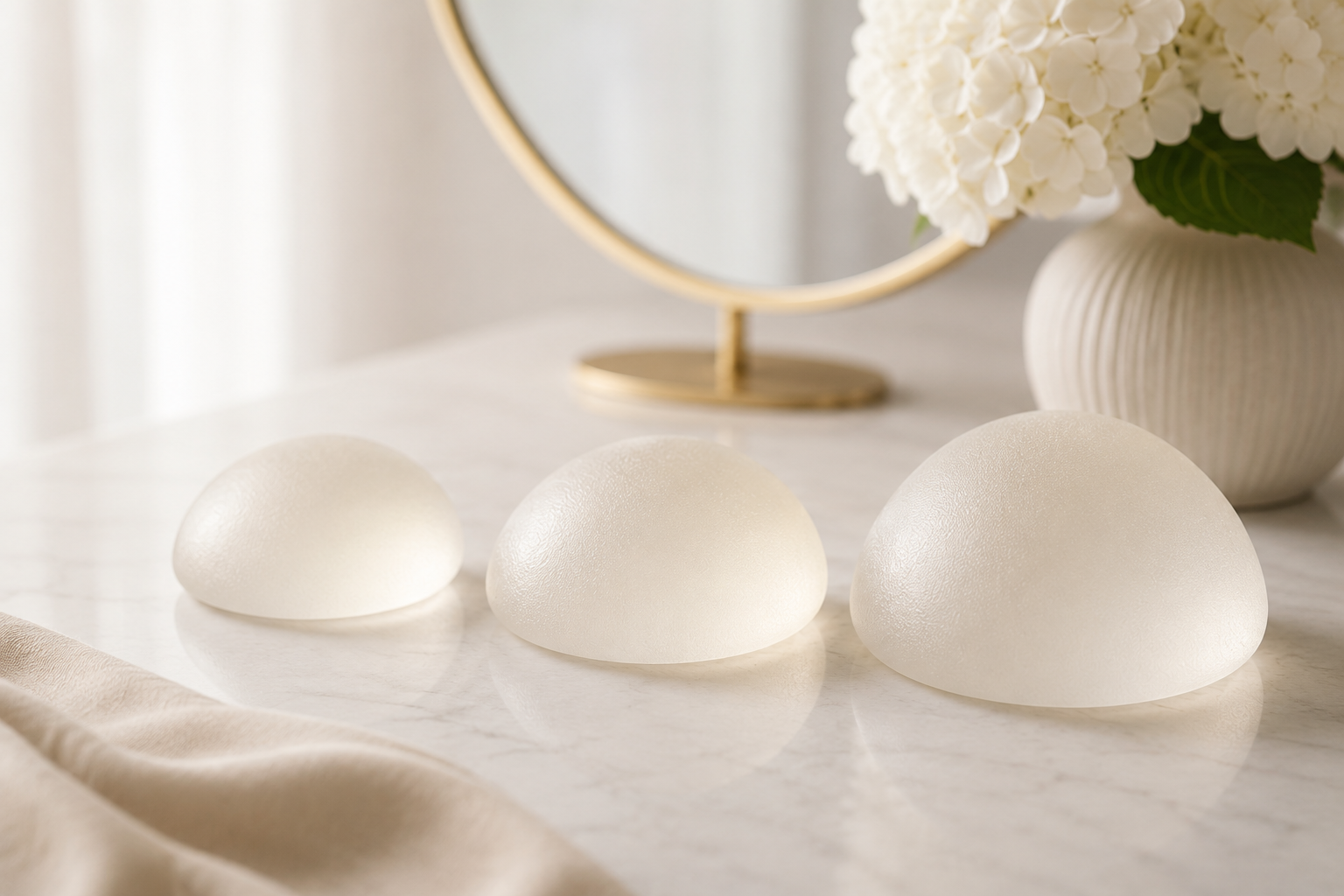
Finding your ideal breast implant size is part science, part artistry. You may have a vision saved in your photos and a favorite bra size in mind, yet your anatomy sets the guardrails. When you match goals to measurements, you get proportionate, natural-looking results that stand the test of time.
At Peoria Cosmetic Surgery, Dr. Shaili Gal plans augmentation with you, not for you. She measures, listens, and uses sizers and photos to translate your preferences into a size, profile, and placement plan that fits your body and lifestyle.
How body type guides implant choice
Your frame and tissues shape what looks natural and what will age well. During consultation, Dr. Gal assesses:
- Base width: The horizontal width of your breast footprint on the chest. Implants should match or be slightly narrower to avoid side spillage or a too-wide gap.
- Soft tissue thickness: How much coverage your skin and breast tissue provide. Thinner tissues often favor moderate profiles or slightly lower volumes for a soft, believable slope.
- Skin elasticity and degree of droop: Tighter skin can support more upper pole fullness. If there is sagging, a lift with augmentation may be the better path to center the nipple and restore shape.
- Chest wall shape and symmetry: Mild rib flare, scoliosis, or natural asymmetry are common. Volume and profile can be adjusted on each side to improve balance.
- Lifestyle and goals: Runners and heavy lifters often prefer lighter volumes and profiles that do not interfere with movement, while others may choose more fullness to match hips or enhance curves.
There is no universal best size. The best choice is the one that respects your base width and tissue envelope while meeting your aesthetic goals.
CCs vs cup size: why bra letters mislead
Implant volume is measured in cubic centimeters, commonly written as cc. Bras are sized by bands and cups that vary wildly by brand and style. That is why the question, How many cc’s are in a full C cup, has no reliable answer. A 300 cc implant on a petite, narrow chest can look like a full C or more, while the same 300 cc on a broad frame with denser tissue may look like a modest change.
Think of cc as a consistent unit and cup letters as marketing. A better approach is to:
- Match implant width to breast base width.
- Choose a profile that delivers the projection you want without outgrowing your soft tissue.
- Use in-office sizers and goal photos to visualize range, not a single letter outcome.
Profiles explained: projection and proportions
Implant profile describes how far the implant projects from the chest for a given width.
- Low profile: Wider base, gentle rise. Works for wider chests seeking subtle enhancement.
- Moderate or moderate-plus profile: Balanced width and projection. A common choice for natural proportions on many frames.
- High profile: Narrower base with more projection. Helpful for a narrow chest that wants fuller projection without overreaching the breast footprint.
Profile is a powerful way to fine-tune shape. For example, two implants with similar cc can look different if one has higher projection and a narrower base. Dr. Gal often uses profile adjustments to add upper pole fullness or to refine symmetry without simply jumping in volume.
Photos, sizers, and planning for symmetry
Bringing a few reference photos helps define what “natural” means to you, like soft upper pole fullness vs a rounder, perkier look. During your visit, you can try on external sizers to feel weight and see proportions under clothing. For asymmetry, different volumes or profiles can be used on each side, sometimes as little as 15 to 30 cc difference, to improve balance while keeping the final look cohesive.
Do implants look bigger when they settle?
Early after surgery, implants sit higher and look tighter due to swelling and muscle tension. Over the first 6 to 12 weeks, they drop and soften, often called drop and fluff. As the lower pole opens, the breast can appear slightly fuller and rounder at the bottom and more natural overall. This is not the implant growing. It is the tissues relaxing and the implant finding its pocket. Final shape continues to refine over several months.
What size is most popular?
Trends shift, but many patients today prefer balanced, natural-looking fullness that harmonizes with the waist and hips. In practical terms, that often falls in the 250 to 375 cc range for average frames, though some need smaller or larger to match their base width and goals. Popular does not equal right for you. Your anatomy, activities, and taste set the final choice.
Setting realistic timelines: back to work and exercise
Recovery varies by technique and your baseline health. Most patients:
- Return to desk work in about 3 to 7 days, depending on soreness and job demands.
- Resume light lower-body exercise around 2 weeks, avoiding bouncing or chest strain.
- Add gentle upper-body activity between 3 and 4 weeks, increasing gradually.
- Return to higher intensity workouts around 4 to 6+ weeks with surgeon clearance.
Your specific plan may differ. Follow your personalized instructions and listen to your body.
For detailed post-op timelines and tips, see our guidance on peoria post-op breast augmentation care and recovery plans on our site.
Common myths, clarified
- Bigger cc always means bigger cup size: Not reliably. Frame size, tissue, and profile all influence perceived size.
- High profile always looks fake: Not true. On a narrow chest, a higher profile can look very natural if matched to base width.
- Cup size guarantees: No surgeon can promise a specific letter. Natural results come from measurements, not labels.
- Asymmetry cannot be improved: It often can, with tailored volume and profile adjustments and, when needed, a lift.
Anesthesia, setting, and Dr. Gal’s approach
Breast augmentation at Peoria Cosmetic Surgery is performed in our AAAHC-accredited office-based surgical suite with hospital-grade monitoring. Anesthesia is individualized, often local with conscious sedation, with general anesthesia used when indicated. Dr. Shaili Gal prioritizes careful measurements, meticulous pocket creation, and discreet inframammary incisions to support soft, natural contours and well-placed scars. Care is personalized from consultation through follow-up.
If you are starting your research, learn more about our approach to cosmetic breast surgery in Peoria and how we tailor planning to your goals.
Quick FAQ
- How does body type affect implant choice? Your base width, tissue thickness, and skin elasticity set the safe and natural range. Dr. Gal fits size and profile to your anatomy so volume looks like it belongs on your frame.
- How many cc’s are in a full C cup, and does cup size translate to implant volume? There is no fixed cc-to-cup conversion. Bra sizing varies by brand, so cc, base width, and profile offer far better planning accuracy.
- What is the most popular boob job size? Natural-looking ranges around 250 to 375 cc are common on average frames, but popularity is less important than matching your measurements and goals.
- Do implants look bigger when they settle? They can appear slightly fuller at the bottom as swelling fades and implants drop and soften. The implant does not grow, the shape refines as tissues relax.
Scheduling and recovery FAQs
- How far out are you booking consultations and surgeries? Consultation and surgery availability fluctuates through the year. Call +1 623-876-9494 for current openings and options.
- How soon can I schedule surgery after my consult? Some patients schedule within weeks and others a bit longer depending on calendars and medical clearance. Your coordinator will review timing after your visit.
- How long is the recovery time? Most daily activities feel comfortable in 1 to 2 weeks, with exercise progression over 4 to 6+ weeks. Your exact timeline will be tailored by Dr. Gal.
- How much time will I need off work? Desk roles typically need 3 to 7 days; physical jobs may require more time. Your plan depends on job demands and your healing.
- When can I drive after surgery? Once you are off prescription pain medicine and can safely perform an emergency stop, often after several days. Dr. Gal will clear you based on your recovery.
- When can I exercise again? Light walking starts early, lower-body exercise around 2 weeks, and more vigorous workouts around 4 to 6+ weeks. Your surgeon will guide return-to-chest training.
- Do I need someone to stay with me after surgery? Yes, a responsible adult should stay with you the first night to help with basic needs and safety. Your team will confirm specifics for your case.
- What pre-op labs or testing do I need? Testing varies by age, health, and procedure details, and can include basic labs, an EKG for certain patients, and a pregnancy test when appropriate. Your coordinator will provide a personalized checklist.
- Do I need medical clearance from my primary doctor? Some patients do, especially with certain health conditions. Dr. Gal will request clearance when indicated and guide next steps.
- When is my pre-op appointment scheduled? Pre-op is usually set 1 to 3 weeks before surgery to review instructions and finalize consents. Your coordinator will confirm the date when you book.
The bottom line
Natural-looking augmentation starts with measurements, not cup letters. Matching implant width and profile to your anatomy, then refining with photos and sizers, delivers proportion and confidence. Expect shape to soften as swelling fades and implants settle, and plan a thoughtful return to work and exercise.
Ready to explore your options with a patient-centered, meticulous approach in Peoria? Schedule a personalized breast augmentation consultation with Dr. Shaili Gal at Peoria Cosmetic Surgery. You can learn more about our office-based surgical suite and accreditation, or call +1 623-876-9494 to book your visit.
